The Influence of Social Media on Public Awareness of Halal Certification

Authors

  • Zaenal Abidin Institut Islam Al-Mujaddid Sabak (IIMS), Tanjung Jabung Timur, Indonesia
  • Niskaromah Institut Agama Islam Banten (IAIB) Serang, Indonesia
  • Google Scholar | Click here to Cite

DOI:

https://doi.org/10.61233/zijen.v3i1.32

Abstract

This study investigates the influence of social media on public awareness of halal certification among residents of Kampung Laut, Kuala Jambi. As halal certification becomes increasingly important in Indonesia’s growing halal industry, understanding the role of digital platforms in shaping public knowledge and perception is crucial. The research aims to analyze the extent to which exposure to halal-related content on platforms such as Instagram, TikTok, Facebook, and YouTube affects individuals’ awareness and attitudes toward halal certification. A quantitative approach was employed using a structured survey distributed to active social media users within the target population. The findings reveal a positive and statistically significant relationship between the frequency of social media use and the level of halal awareness. Respondents who frequently engage with halal content tend to show higher levels of understanding and trust toward certified products. These results are interpreted through the lenses of the Uses and Gratifications Theory, the Theory of Planned Behavior, and the Diffusion of Innovation Theory, which together provide a multidimensional framework for understanding the behavioral, motivational, and communicative aspects of halal awareness. This study contributes to the academic discourse by extending halal communication research into coastal, digitally underserved communities, and offers practical implications for policymakers, halal authorities, and content creators seeking to strengthen public engagement with halal principles through social media channels.

Keywords:

social media, public awareness, halal certification, Kampung Laut Kuala Jambi, digital communication

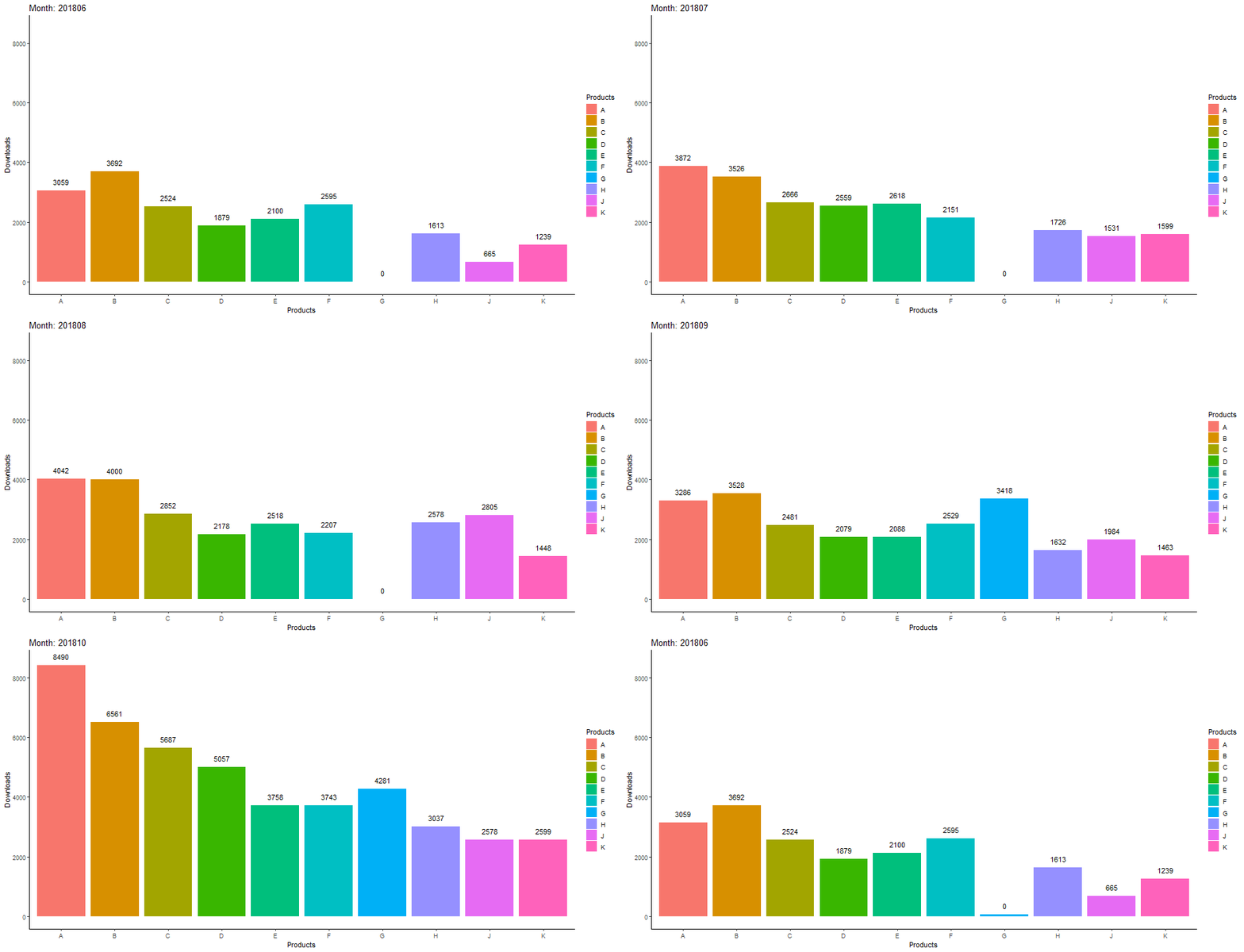
Downloads

Download data is not yet available.

References

Abidin, Z. (2024). Innovative Community Service Programs with Local Participation to Build Independent Villages. Zabags International Journal Of Engagement, 2(1), 29–38. https://doi.org/10.61233/zijen.v2i1.17

Adiwibowo, S., & Heryati, R. (2018). The influence of demography on the relationship of emotional content and social media usage in halal promotion. International Journal of Halal Studies, 2(1), 33–45.

Agustiani, R., & Yusa, M. (2023). Pengaruh halal awareness dan social media marketing terhadap purchase intention produk halal. Jurnal Manajemen Halal Indonesia, 5(2), 120–134.

Abidin, Z., Mahfooz, A., Sulaiman, F., & Fauzi, H. (2024). Humanistic Approach in Islamic Education: Building Emotional and Spiritual Intelligence in the Digital Age. Zabags International Journal of Islamic Studies, 1(1), 29–35. https://doi.org/10.61233/zijis.v1i1.5

Alasmari, S., & Zavalina, O. L. (2022). Using two theories in exploration of the health information behavior of social media users. Information Research, 27(1), 45–61.

Azis, I., & Irwan, M. (2024). Predictions of Muslim middle-class consumer behavior in Indonesia: Insights from social media analytics. Journal of Islamic Marketing, 15(1), 101–118.

Ahmed, A., Abidin, Z., & Mahfooz, A. (2023). The Urgency of Islamic Education Management in Era Globalization. Zabags International Journal Of Education, 1(2), 82–90. https://doi.org/10.61233/zijed.v1i2.12

Coursaris, C. K., Yun, Y., & Sung, J. (2013). Disentangling Twitter’s adoption and use discontinuance intentions: A theoretical framework and empirical investigation. Computers in Human Behavior, 29(3), 1063–1074.

Fatmi, M. R., Kartika, A., & Ahmad, M. (2020). Determinants affecting purchase intention of halal products: A review. Journal of Halal Product Research, 3(1), 55–70.

Glen, R. (2021). Understanding the factors influencing mobile apps adoption using statistical software: A practical guide. Applied Informatics Journal, 5(2), 67–81.

Hasim, S., Ishak, N. M., & Hassan, M. A. (2025). Digital marketing strategies and consumer behaviour in the halal industry. International Journal of Business and Technology, 12(1), 112–128.

Hayeemad, M., & Soliman, M. (2024). Modelling halal cosmetics purchase intention among Muslim women in Thailand using DOI, TPB, and TRA. Journal of Islamic Marketing, 15(2), 201–219.

Journal of Halal Research, Policy, and Industry. (2024). Harnessing social media to boost consumer awareness of halal certification. JHRPI, 6(1), 22–35.

Kamarulzaman, Y. (2011). Understanding social media adoption: The role of perceived usefulness and perceived ease of use. Asian Journal of Business Research, 1(1), 1–10.

Mardoni, Y., & Amsal, M. (2023). Halal tourism and social media: From netizen’s perceptions to policy implications. Tourism Development Studies, 4(2), 66–80.

Nadiya, A., Kudus, S., & Hasanah, I. (2023). Purchase intention of halal food in online shop among Gen Z: The role of online reviews. Journal of Halal Consumer Research, 2(1), 25–39.

Nugraheni, R., Riswantini, T., & Syahputra, I. (2023). Revealing Indonesian netizens’ sentiments towards halal labels in social media. Halal Studies International Journal, 7(1), 80–95.

Priliana, D., Raya, Y., & Fadli, M. (2020). Pengaruh social media marketing terhadap intention to visit destinasi halal di Indonesia. Jurnal Ilmu Pariwisata Indonesia, 5(3), 111–125.

Puspita, A., Iskandar, A., & Ramli, H. (2023). Social media and halal industry in Indonesia: A netnographic perspective. Jurnal Komunikasi Halal Indonesia, 6(2), 144–160.

Riyanita, K., Abidin, Z., & Munip, A. (2025). Application of Services in Increasing Consumer Satisfaction. Zabags International Journal Of Economy, 3(1), 50–55. https://doi.org/10.61233/zijec.v3i1.92

Rohandi, R., & Gumilar, A. (2023). Social media marketing to brand awareness in private halal education institutions. Indonesian Journal of Halal Marketing, 4(1), 15–30.

Safitri, R., Maulida, H., & Wulandari, F. (2024). Impact of halal knowledge on halal awareness through Instagram content. Journal of Islamic Media Studies, 5(1), 88–101.

Sujawoto, S., Nur, M., & Suhada, A. (2025). The influence of social media interaction on visiting intention to halal tourist destinations. International Journal of Islamic Tourism Studies, 3(2), 56–73.

Swimbawa, A., & Lemy, D. M. (2023). Pengaruh social media marketing terhadap brand awareness pada UMKM halal di Jakarta. Jurnal Ekonomi Digital Halal, 5(1), 98–110.

Taherdoost, H. (2019). Importance of technology acceptance assessment for successful implementation of information systems. Journal of Applied Research in Technology & Engineering, 2(1), 25–38.

Tang, T. W., Iijima, J., & Pee, L. G. (2011). Employees’ innovation behavior: The role of external knowledge. Journal of Knowledge Management, 15(2), 298–312.

Utama, P. D., & Kumar, M. (2025). The influence of social media marketing on brand image and halal product loyalty. Halal Branding Review, 3(1), 41–55.

Valente, T. W. (2003). Diffusion of innovations. BMJ, 325(7377), 1103.

Wijayanti, D., Hakim, A., & Supriyanto, A. (2021). Evaluation on social media marketing from customers’ perspective in the halal retail industry. Halal Marketing Journal, 4(2), 75–90.

Downloads

Published

2025-06-30

How to Cite

Abidin, Z., & Niskaromah. (2025). The Influence of Social Media on Public Awareness of Halal Certification. Zabags International Journal of Engagement, 3(1), 39–47. https://doi.org/10.61233/zijen.v3i1.32

Issue

Section

Articles

Most read articles by the same author(s)

1 2 > >>